Glass Definition
glăs
glassed, glasses, glassing
noun
glasses
A hard, brittle substance made by fusing silicates with soda or potash, lime, and, sometimes, various metallic oxides into a molten mass that is cooled rapidly to prevent crystallization or annealed to eliminate stresses: various types of glass can be transparent, translucent, heat-resistant, flexible, shatterproof, photochromic, etc.
Webster's New World
Any substance like glass in composition, transparency, brittleness, etc.
Webster's New World
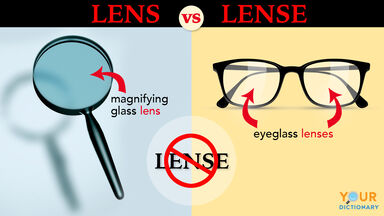
A pair of lenses mounted in a light frame, used to correct faulty vision or protect the eyes.
American Heritage
Webster's New World
A binocular or field glass.
American Heritage
adjective
Of, made of or with, or like glass.
Webster's New World
Fitted with panes of glass; glazed.
American Heritage
Synonyms:
verb
glassed, glasses, glassing
To enclose or encase with glass.
American Heritage
To put into glass jars for preserving.
Webster's New World
To equip with glass panes; glaze.
Webster's New World
To look at through a telescope, etc.
Webster's New World
To mirror; reflect.
Webster's New World
Synonyms:
- glaze
- glass in
- glaze-over
- glass over
idiom
glass in
- to enclose with glass panes
Webster's New World
Idioms, Phrasal Verbs Related to Glass
- glass in
Origin of Glass
-
From Middle English glas, from Old English glæs, from Proto-Germanic *glasą, possibly related root *glōaną (“to shine”) (compare glow), and ultimately from the Proto-Indo-European root *ǵʰel- (“to shine, shimmer, glow”); cognate with West Frisian glês, Low German Glas, Dutch glas, German Glas, Icelandic gler.
From Wiktionary
-
Middle English glas from Old English glæs ghel-2 in Indo-European roots
From American Heritage Dictionary of the English Language, 5th Edition

Find Similar Words
Find similar words to glass using the buttons below.