Protein Definition
prōtēn, -tē-ĭn
proteins
noun
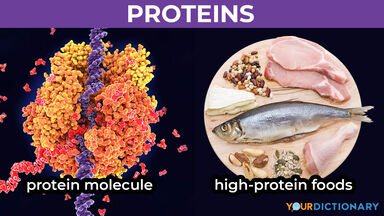
Any of a large class of complex polymers consisting of long chains of polypeptides often bonded with nucleic acids, lipids, etc.: proteins are found in all cells, are essential to the diet of animals, are the basic components of cartilage, hair, skin, etc., and often function as enzymes, hormones, or antibodies.
Webster's New World
A food that is composed of such macromolecules.
What protein would you like for dinner: chicken or fish?
American Heritage Medicine
The portion of a food consisting of such macromolecules.
Nuts contain significant quantities of protein.
American Heritage Medicine
Other Word Forms of Protein
Noun
Singular:
protein
Plural:
proteinsOrigin of Protein
-
Suggested by Berzelius in a letter to Mulder, from French protéine and German Protein, both coined based on Ancient Greek πρωτεῖος (prōteios, “primary"), from πρῶτος (prōtos, “first").
From Wiktionary
-
French protéine from Late Greek prōteios of the first quality from Greek prōtos first per1 in Indo-European roots
From American Heritage Dictionary of the English Language, 5th Edition
Find Similar Words
Find similar words to protein using the buttons below.